Students are using their new Google accounts to begin drafting their wax museum reports. Students have learned how to log into their accounts, create a document, share the document with their teacher and begin typing using their research notes. Check the newsletter in this week's Friday folder to learn more about student Google accounts.
Showing posts with label Writing Workshop. Show all posts
Thursday, February 27, 2014
Students Are Drafting Their Wax Museum Reports!
Students are using their new Google accounts to begin drafting their wax museum reports. Students have learned how to log into their accounts, create a document, share the document with their teacher and begin typing using their research notes. Check the newsletter in this week's Friday folder to learn more about student Google accounts.
Friday, February 21, 2014
Wax Museum Costuming Information
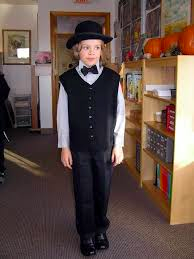
In order to help students look the part, we start to think about costuming ideas once they have selected the hero they will research. Costumes are not elaborate, but we try to put items together to make them resemble their hero and help them “feel” the part. Creative thinking and items from the closet usually do the trick. (See Amelia Earhart, Thomas Edison, and Neil Armstrong below.)
Typically, a student will work with their family to create their costume. As teachers, we try to support students who need to complete their look with our small classroom collection of clothing and props along with some creative thrift shop purchases.
If you have some extra costuming items cluttering up a closet, you can send those in and help us build our collection. Check the list below for some ideas!
Possible Costume & Prop Items
- Old fashioned looking dresses, blouses, & skirts
- Sport jackets
- Handkerchiefs, scarves, shawls, & ties
- Wigs or hats
Monday, February 17, 2014
Third Grade Wax Museum
The Wax Museum is one of the most memorable projects for third graders! Third grade researchers will be reading about a hero or heroine, taking organized notes, and writing a paper to teach others about this important person. Students will then compose a monologue that they will deliver as their hero or heroine - in full costume!
Our Wax Museum presentations will be on:
Tuesday, March 25 from 1:30-2:30
Wednesday, March 26th from 6:00-7:00
Ways for Parents to Get Involved with Wax Museum
There are many ways that you can help our kids prepare for Wax Museum!
Here are some of the ways that you can help:
- Send items that can be used for costuming
- Help students rehearse their monologues ( We will need volunteers to help students rehearse and offer feedback from March 17th to March 24th)
- Help students dress in costumes for daytime performance (We will need volunteers to come on Tuesday, March 25th from 12:45 to 1:30)
- Help students dress in costumes for evening performance (We will need volunteers to come on Wednesday, March 26th from 5:15 - 6:00)
If you would like to help, please complete the volunteer sheet that will be in your child's Friday folder.
Finding our Heroes!
Today students learned more about biographies from Ms. Bolas. After our lesson, we looked through tables and tables of biographies to find a hero to research. Ask your child who they will be learning all about!
Tuesday, November 19, 2013
We Are Experts!
Third grade writers are learning the art of informational writing. Writers are beginning to think about how they are "experts" in a variety of topics. Students made expert lists this week. Boy are we experts on all kinds of topics - soccer, tap dancing, tree climbing, origami, annoying our little brothers - the lists go on and on. Be sure to ask your child about their expert list!
Monday, October 7, 2013
Writers study author's craft...
Third grade writers studied a mentor text, Come On, Rain! by Karen Hesse.
We worked in partnerships to find examples of powerful language that really pulled us in as readers. We looked for parts that helped us start the mental movies in our minds. We starred these meaningful parts of the text and wrote about what made them powerful.
We found poetic language, great leads, sensory details, action sequences that helped us make mental movies, and much, much more. We made a list of all the powerful parts and decided that we would try to use some of these same techniques in our own writing! Here are a few examples of our work.
We worked in partnerships to find examples of powerful language that really pulled us in as readers. We looked for parts that helped us start the mental movies in our minds. We starred these meaningful parts of the text and wrote about what made them powerful.
We found poetic language, great leads, sensory details, action sequences that helped us make mental movies, and much, much more. We made a list of all the powerful parts and decided that we would try to use some of these same techniques in our own writing! Here are a few examples of our work.
![]() |
| Text - And that's when I see it coming, clouds rolling in, gray clouds, bunched and bulging under a purple sky. "We like this part because it sounds really good and it's fun to say." |
![]() |
| Text - Come on, rain! I say squinting into the endless heat. "I like how they say come on rain as in it hasn't rained for a long time." |
![]() |
| Text - Not a sign of my friends Liz or Rosemary, not a peep from my pal Jackie-Joyce. "We like how it said 'not a peep' from Jackie Joyce instead of 'no words' from Jackie Joyce." |
![]() |
| Text - Come on, rain! I say squinting into the endless heat. "It (the lead) pulls me into the story because it tells us it a place that hasn't had rain in awhile." |
![]() |
| Text - "Come on, rain!" I say squinting into the endless heat. "I like it cause I can imagine what it's like in that heat." |
![]() |
| Text - Three weeks and not a drop. "Me and my partner like it because it said how many weeks it has not rained" |
Tuesday, October 1, 2013
Rehearsing Leads
Third graders looked at leads from different texts and examined the many ways that authors can pull readers into their stories. After studying these different leads, third grade writers chose one of their stories and rewrote the lead in two or three different ways. Finally, authors chose the lead they felt worked best with their story. Third grade writers work hard and make tough decisions!
Friday, September 27, 2013
Writers Reflect, Make Improvements, and Receive Feedback
This week we looked back at our best stories and used our writing checklist to reflect on what is going well and where we can make improvements.
Later we went back to our drafts to revise and improve.
![]() |
| This is the narrative checklist that 3rd grade writers are using. |
In our sharing sessions, students elect to share completed or in process pieces with the group. Students ask questions of the writer and share compliments ("I like how you described the ice cream cone..." or "I could really hear you yelling at your little brother in your dialogue!").
In our conferences, the teacher shares a compliment with the student to reaffirm what the writer is doing well. ("I really like the way you ended this story. It was funny and surprising. This will really stick with the reader and a lot of writers like to end stories like this.")
Then the teacher offers a suggestion that could help improve this piece and future pieces of writing. ("I think if you added dialogue to your story, it would really help the reader feel like he was right there with you when your dad was teaching you to float on your back.")
![]() |
| A student narrative with some feedback from the group on a sticky note. |
Stories Hold the Universe Together
The student responses were thoughtful. Students reported that they hear stories in the books we read, during our project time, in our music, from our imaginations, when listening to advertisements, and even in our dreams while we sleep.
Ms. Bremer talked to us about personal narrative and shared her experience writing a memoir. She showed the students that many times we find our stories in our moments of discovery - the times when we discover something about ourselves, others, or the world.
Next the students set to work creating "The first time I ..." narratives. Students worked to keep their pencils moving and words flowing. Afterwards, students shared their narratives with the group and received feedback.
![]() |
| Khalil introduces our writing expert (and his mom) Ms. Bremer. |
Wednesday, September 25, 2013
Using a Storyteller's Voice!
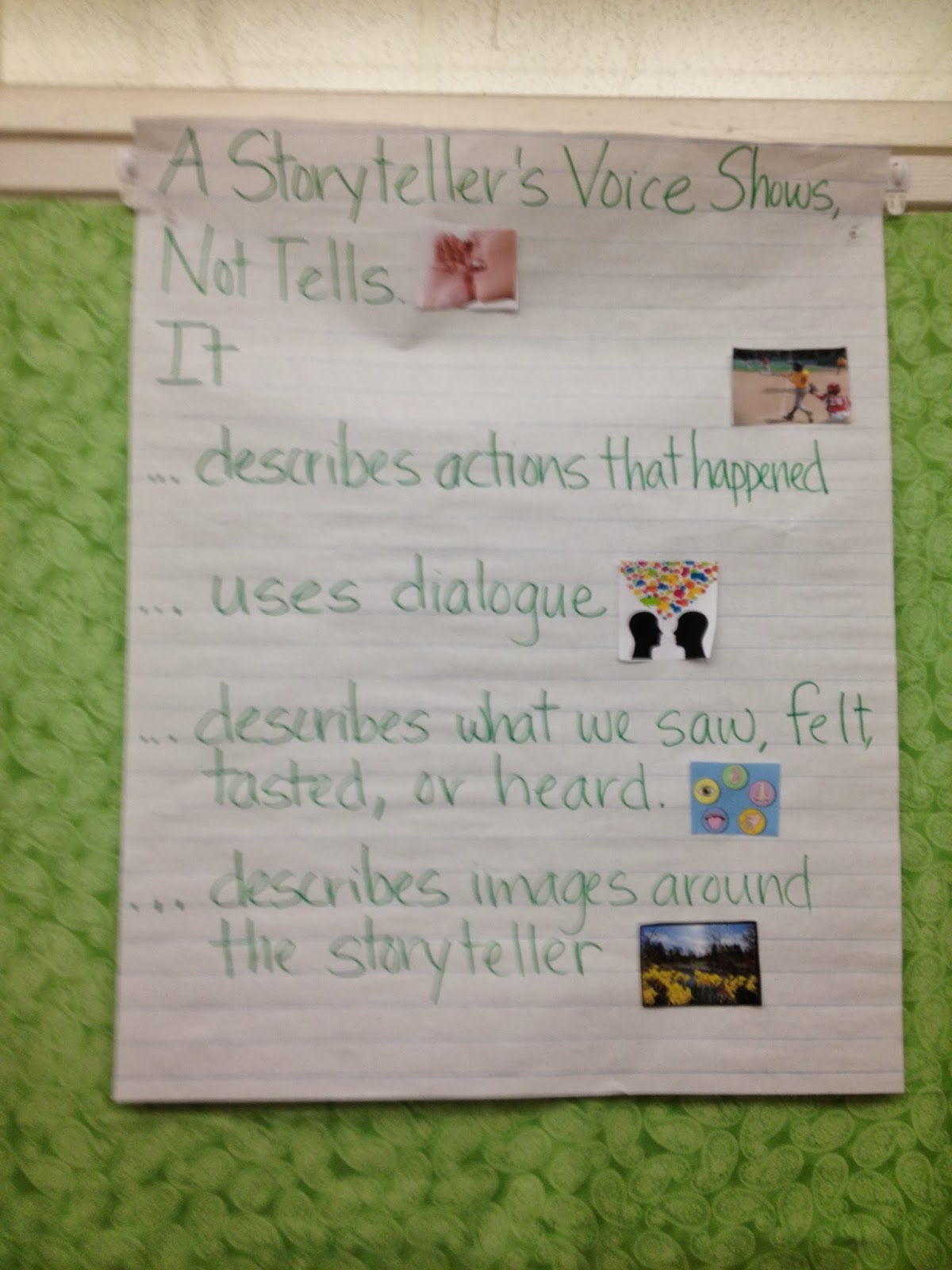
Writers are learning to use a storyteller's voice when they write! We have been thinking about the difference between writing a summary of something that has happened and writing a story about something that has happened.
We are getting really good at spotting the differences between summaries and stories.
Here are some of the things we include when we are telling a story:
- descriptions of actions
- dialogue
- sensory descriptions (sounds, sights, smells, tastes)
- descriptions of images around the storyteller
Our third grade writers are doing a great job making their readers feel like they are right there in the story by including these elements in their writing!
Thursday, September 19, 2013
The Hard Parts of Writing!
The students became the writing teachers today as we talked about the hard parts of writing. We made a list of challenges that we face when writing.
Then students worked in small groups to come up with a few suggestions that they would give to writers who were facing these challenges. We compiled all of the suggestions and made charts and posted them in the room. Now we can use our suggestions whenever we get stuck!
Students are writing long and strong. We are enjoying everyone's real, true stories!
Monday, September 16, 2013
Writers are learning strategies so they can write real true stories!
Third graders are working hard at writing real, true stories. Sometimes we have stories to tell, but when we don't we use strategies to get our ideas flowing!
![]() |
| Here are two of the strategies students can look to when they get stuck. |
Students are writing long and strong - trying to write at least one page a day. They are working to tell their story from beginning to end by making a movie in their mind of what happened first, next, and after that. Third graders are also bringing their story to life using dialogue and description.
Friday, September 13, 2013
Writers are revving up!
We have launched our writer's workshop this week and students are beginning their work in writer's notebooks.
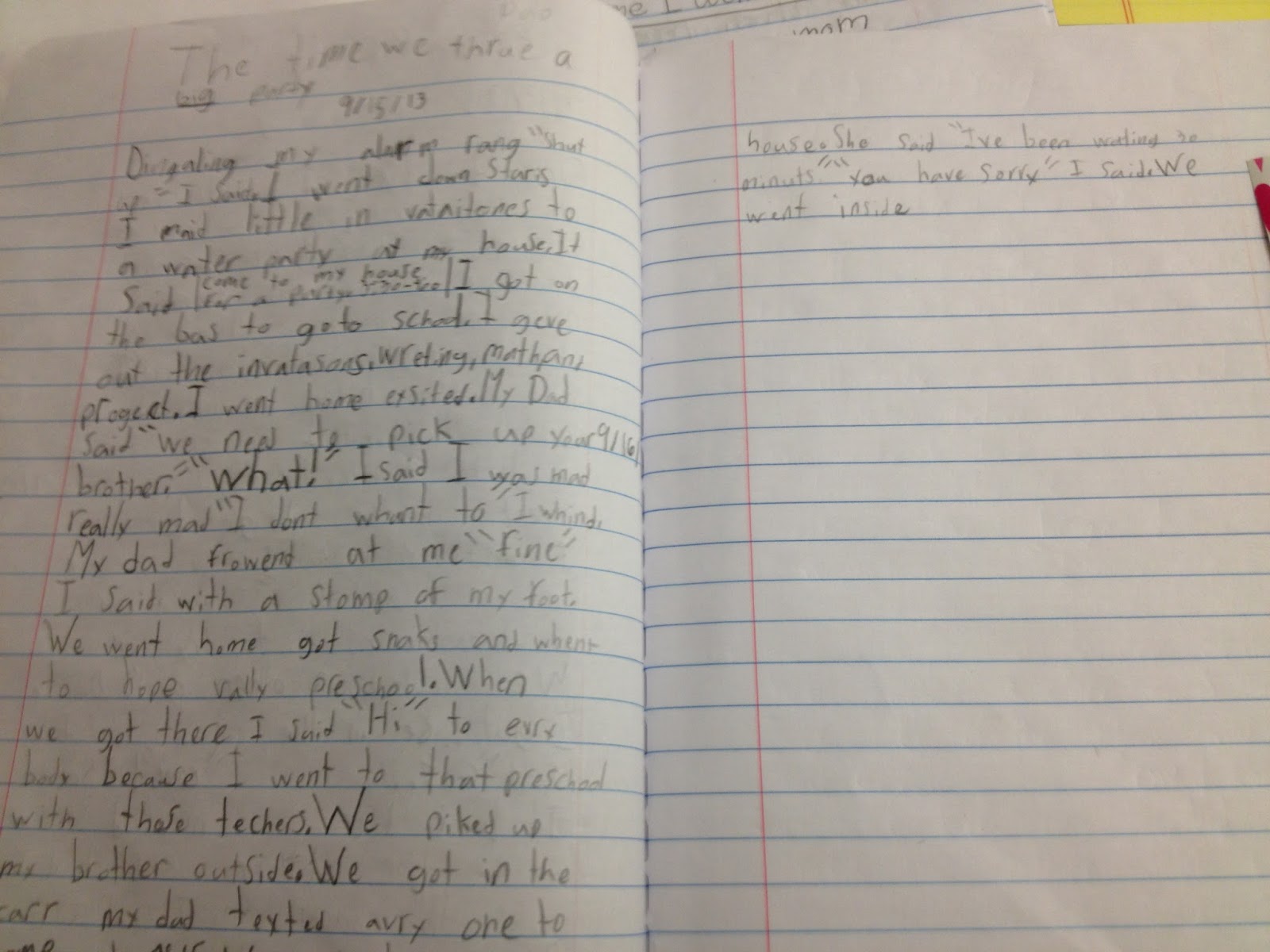
First we looked at a real third grade writer's notebook and figured out what third grade notebook writers do and don't do.
Next, we had to be super self smart as we made writing resolutions for ourselves this year. We thought about what was easy for us to do as writers and what was more challenging. Then we made two resolutions that we will work on this year.
This weekend students are going to personalize their writer's notebooks. This means that they will add drawings, photographs, or other decorative items that will make their notebook special.
Here are the guidelines:
You must include:
- Your name somewhere on the front cover
You might include:
- Picture of you
- Pictures of your family
- Pictures of places that you have been or want to go to
- Ticket stubs from movies, plays, sporting events, etc
- Drawings or decorations
- Pictures that represent your hobbies
- Pictures that represent your favorite things
*Anything you include should be appropriate for school
You can cover:
- Anything on the front and inside front cover
- Anything on the back and inside back cover
Here is an example of a personalized writer's notebook:
Students will be doing a lot of incredible writing in their notebooks this year!
Subscribe to:
Posts (Atom)